Stamp collecting has a certain charm that never gets old. Whether it’s the appeal of tiny pieces of history or just the fun of tracking down unique designs, this hobby draws people from all backgrounds. If you’re just thinking about getting started, you might find it a little overwhelming looking at all the stamps and tools out there. I’ll break it down with this practical guide that covers everything you need as a beginner in stamp collecting.
What Makes Stamp Collecting a Great Hobby?
Stamp collecting, also called philately, has been around since the world’s first postage stamp, the Penny Black, was put out in 1840. Collectors now have access to an almost endless variety of topics, styles, countries, and time periods. What I love about it is that stamps are like bite-sized artifacts, each telling part of a bigger story. Collecting stamps isn’t just about owning them. It’s about exploring history, art, geography, and sometimes even a bit of detective work. Plus, it’s a hobby you can enjoy almost anywhere, at any pace.
Stamps have been used for more than sending letters; they mark important events, celebrate famous people, and even reflect social and political changes. Modern collectors often follow specific interests, like wildlife stamps, Olympic Games themes, stamps from a favorite country, or even unusual shapes and materials. The variety keeps things fresh, and prices can range from just pennies to thousands of dollars for rare finds.
Essential Stamp Collecting Tools for Beginners
Starting out doesn’t need to be expensive or complicated. Here are the basic items I’d recommend for any newcomer to the world of stamps:
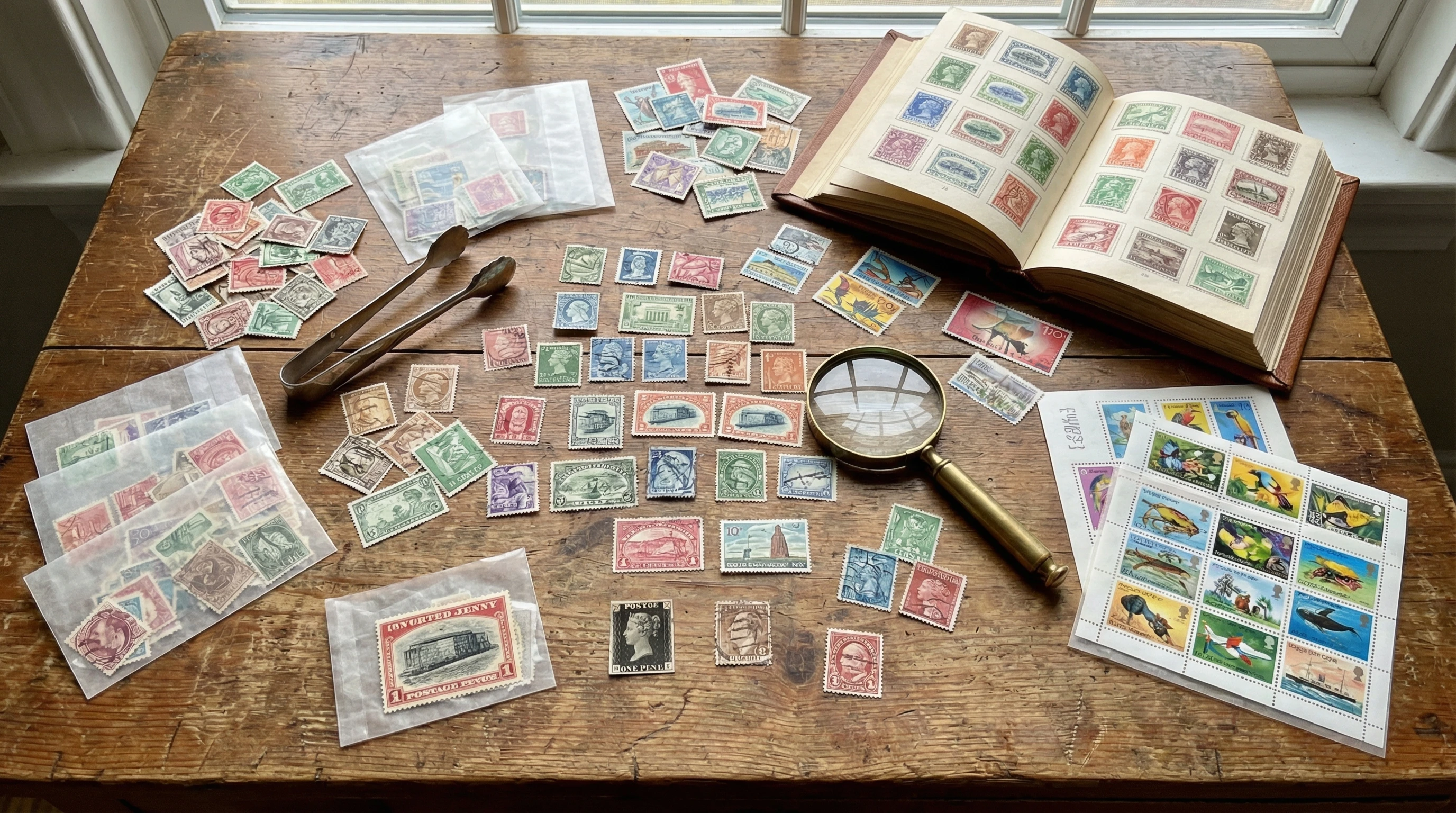
- Stamp Album: A good album keeps your stamps organized and protects them from damage.
- Stamp Tongs: Special tweezers with rounded tips, made for handling stamps gently and avoiding creases or tears.
- Magnifying Glass: Perfect for spotting tiny details, watermarks, or small print you might miss with the naked eye.
- Perforation Gauge: This simple tool lets you measure the tiny holes along the edge of each stamp, and that can make a difference when figuring out or valuing them.
- Watermark Detector Fluid: Used to reveal hidden designs pressed into the paper, which is important for identifying some older stamps.
With these tools, you’re pretty much set to start building your collection and learning as you go. Many kits come with the essentials, so shopping around for a starter kit is a smart move if you want a quick start.
Finding and Choosing Stamps
There are plenty of ways to get your hands on fun, interesting stamps. Most beginners kick things off with the following sources:
- New Issue Packs: Postal services release these regularly, and they’re an easy way to get a bunch of stamps based on a single theme or year.
- Mixes and Grab Bags: Sold by stamp shops and online sellers, these contain a random bunch of stamps from different places and time periods. They’re affordable and make for a fun surprise every time.
- Trade with Other Collectors: Whether through clubs, online communities, or local groups, trading is a classic part of the hobby and a really fun way to connect with others.
- Family Heirlooms: Old family scrapbooks or letters may have stamps worth adding to your new collection. Always check with relatives… they might hand down something truly eye-catching!
As you collect, you’ll notice certain themes, countries, or time periods catch your eye. That’s when you might start to focus. I started out collecting any and every stamp, but now tend to track down stamps that show birds—there’s just something about the artwork that I really enjoy, and it gives my collection a personal touch.
How to Sort and Store Your Stamps
Proper organization helps keep your collection neat and your stamps safe. Here are a few steps I’ve found helpful:
- Sort by Theme, Country, or Year: Decide on a system that makes the most sense to you. Some collectors even use digital spreadsheets to keep track of what they’ve got or to spot gaps in their collection.
- Mount Stamps with Hinges or Mounts: Hinges are small, gummed pieces of paper that attach the stamp to your album page. Mounts are protective sleeves, handy for valuable stamps because they don’t stick to the stamp at all. If you own very expensive stamps, consider using plastic sleeves for maximum protection.
- Keep Your Album Dry and Cool: Humidity and sunlight can damage stamps, causing them to fade or stick together. I keep mine away from windows and the damp basement. Somewhere flat and shaded works well for long-term storage.
If you want to go beyond a basic album, archival pages and stock books provide extra protection for valuable or older stamps. Acid-free materials are worth looking for if you plan to keep your collection for many years and want to pass it down.
Getting the Most Out of Stamp Collecting: Tips for Beginners
Stamp collecting can start off casual, but a few simple habits make it a lot more rewarding:
- Learn the Story Behind Stamps: When you come across a new stamp, take a minute to find out what it commemorates or why it was issued. There’s a real sense of discovery that adds depth to your collection.
- Join a Local Club or Online Forum: These groups are really helpful for trading, learning about rare issues, and keeping up with new releases. The American Philatelic Society (stamps.org) is a great place to start in the U.S.
- Handle Stamps with Care: Even newer stamps can get damaged by oils on your fingers. Always use your stamp tongs, and work on a clean surface free of debris.
- Set a Budget: It’s easy to get carried away, especially at stamp shows where there’s lots to see and buy. I set a monthly spending cap for myself to stay disciplined and make sure I’m enjoying the hobby stress-free.
- Keep Learning: Stamp catalogs are packed with info and can help you figure out if that odd little triangle stamp from your mix is something rare. The Scott Standard Postage Stamp Catalogue is a pretty handy reference for most U.S. collectors, but there are plenty of other country- or region-specific resources out there too.
Common Challenges and How to Handle Them
Like any hobby, stamp collecting comes with its ups and downs. Here are a few common hurdles:
- Handling Forgeries: There are some fake or altered stamps out there, especially among older or high-value issues. Careful research and buying from reputable dealers reduces your risk. Familiarize yourself with common signs of forgeries and when in doubt, reach out to more experienced collectors for advice.
- Dealing with Damaged Stamps: It’s normal to come across some stamps that are torn or heavily postmarked. Unless it’s extremely rare, collectors generally prefer stamps in nice condition. Swap out damaged ones if you can, and keep the best examples for your primary collection.
- Staying Organized: Large collections can get a bit messy if you don’t keep up with sorting and labeling. I spend a little time each month updating my album, which makes it easy to enjoy and share, and keeps everything simple when adding new stamps.
- Storage Issues: Heat, sunlight, or pests can all damage stamps. Investing in quality storage supplies—like acid-free pages and sturdy albums—truly pays off for long-term preservation. Also, keeping storage areas clean and dry will help protect your collection.
Being proactive about these challenges helps keep stamp collecting enjoyable and safeguards your collection for years to come.
Advanced Tips and Ideas
Focus on a Theme or Specialty: After building a nice collection of mixed stamps, you might want to get into specific themes, like animals, space, or a particular country. Focusing lets you get deeper into research and connect with other collectors who have similar passions. Some even branch out into collecting stamps based on errors, misprints, or historical context, opening up entirely new avenues of discovery.
Learn to Identify Watermarks and Varieties: Checking small details, such as perforations or paper type, can help you spot the difference between common and more valuable issues. Watermark detection is a pretty cool skill that can help you uncover new finds you might have overlooked.
Attend Stamp Shows and Exhibitions: These events are great for meeting dealers, tracking down rare stamps, and learning from others. Even if you just browse, it’s an awesome way to see stamps up close and grow your understanding. Don’t hesitate to strike up conversations with other attendees or experts—most are happy to share their knowledge and enthusiasm.
Most of the fun is in the hunt and learning. Building knowledge over time opens up more opportunities. Maybe you’ll spot an overlooked rarity in a box of old envelopes, or you’ll uncover the next-level cool story behind a commemorative issue. As you grow more confident, you may even want to exhibit your collection or try competitive philately for new challenges.
Frequently Asked Questions
Here are some questions I hear a lot from people just starting out with stamp collecting:
Question: Where should I buy my first stamps?
Answer: Check out your local post office for new issues, browse online sites like eBay or Delcampe, or visit a local hobby shop. For more exotic stamps, stamp shows and club trading events are worth checking out—you’ll meet people with wide-ranging collections and advice.
Question: How do I know if a stamp is valuable?
Answer: The value comes down to rarity, condition, and demand. Stamp catalogs give detailed price ranges for “mint” and “used” stamps. If you stumble upon something you think is special, a professional appraisal or advice from a seasoned collector helps. Sometimes, it’s as simple as comparing with similar stamps in a current catalog to get a ballpark value.
Question: Can I just keep stamps in an envelope?
Answer: That works for a handful, but storing in acid-free albums or stock books protects them from bending and sticking together. For long-term preservation, albums are definitely a better option, and they make it easier to share and enjoy your collection over time.
Wrapping Up: Final Thoughts on Starting Your Stamp Collection
Beginning stamp collecting is all about curiosity and enjoying the process—not worrying about building a huge or expensive collection right away. Starting with the basics lets you explore stamps at your own pace, while learning about history and the world along the way. As your collection grows, you’ll develop your own style and learn what you most enjoy. With a little care and some organizational tricks, stamp collecting can turn into a truly satisfying lifelong hobby. Happy collecting!


Leave a Reply